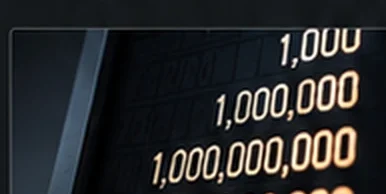
What comes after a trillion? Quadrillion comes next. In the short-scale numbering system used in modern American English, each new named number is 1,000 times larger than the previous one.
The sequence begins: million, billion, trillion, quadrillion, quintillion, sextillion, septillion, octillion, nonillion, and decillion.
Table of Contents
What Comes After a Trillion? Large Numbers in Order
| Name | Written as a power of ten | Number of zeros |
|---|---|---|
| Million | 106 | 6 |
| Billion | 109 | 9 |
| Trillion | 1012 | 12 |
| Quadrillion | 1015 | 15 |
| Quintillion | 1018 | 18 |
| Sextillion | 1021 | 21 |
| Septillion | 1024 | 24 |
| Octillion | 1027 | 27 |
| Nonillion | 1030 | 30 |
| Decillion | 1033 | 33 |
Each step adds three zeros. That means multiplying by 1,000—not simply adding 1,000.
How Big Is a Quadrillion?
One quadrillion written out is:
1,000,000,000,000,000
That is:
- 1,000 trillion
- 1,000,000 billion
- 1,000,000,000 million
The commas make the pattern easier to follow. Starting at the right, each group of three digits represents another step: thousands, millions, billions, trillions, and quadrillions.
For a closer look at the earlier steps, read our million, billion, and trillion comparison.
What Comes After Quadrillion?
Quintillion comes after quadrillion. One quintillion equals 1,000 quadrillion and has 18 zeros:
1,000,000,000,000,000,000
Next comes sextillion, with 21 zeros, followed by septillion, with 24 zeros. The same pattern continues throughout the chart.
Is Decillion the Biggest Number?
No. Number names continue beyond decillion, and there is no largest number. Whatever number you choose, you can always add one to make a larger number.
“Zillion” is an informal expression for a very large amount. It does not represent a specific numerical value.
Why Do Some Number Names Differ?
This chart uses the short scale. In the long-scale system, a billion means a million million rather than a thousand million. When reading international or historical material, check which system the author uses.
How to Read a Large Number Without Losing Your Place
Read the comma-separated groups from right to left before you say the number aloud. The rightmost group is ones, followed by thousands, millions, billions, trillions, and quadrillions. Every group has three positions, even when all three are zero.
For example, 2,040,000,000,000,000 is two quadrillion forty trillion. The 040 group represents forty trillion; it does not mean forty billion. Writing the groups as 2 | 040 | 000 | 000 | 000 | 000 makes the positions easier to check.
You can also compare the exponents. A trillion is 1012 and a quadrillion is 1015. Subtract the exponents: 15 − 12 = 3. The ratio is 103, or 1,000. This explains what comes after a trillion without relying only on memorizing names.
Check Your Understanding With Three Examples
- Which is larger: 900 trillion or one quadrillion? One quadrillion is larger because it equals 1,000 trillion.
- How do you write 1.5 quadrillion? Multiply 1.5 by 1,000,000,000,000,000 to get 1,500,000,000,000,000. It is also 1,500 trillion.
- Does 1015 mean 10 × 15? No. It means multiplying fifteen factors of ten, giving one quadrillion.
When checking an answer, convert both amounts to the same unit first. Comparing 900 with 1 would be misleading if one amount is in trillions and the other is in quadrillions. The number name is part of the quantity.
Keep precision separate from notation. A headline that says “1.5 quadrillion” might be rounded; writing its digits does not tell you whether the original count was exact. This guide explains the numerical value of the expression.
Reference for Powers of Ten
The NIST table of SI prefixes provides an independent reference for powers such as 1012 and 1015. The corresponding prefixes are tera and peta when attached to measurement units.
From Numbers to Design
Million, billion, and trillion form a striking sequence, both mathematically and visually. Explore how those three words become a graphic statement in the Millions Billions Trillions collection.